
a站被罚12万元
Exclusive: Brazilian soybean industry expects historically high export volumes to China: association_我的网站

A |
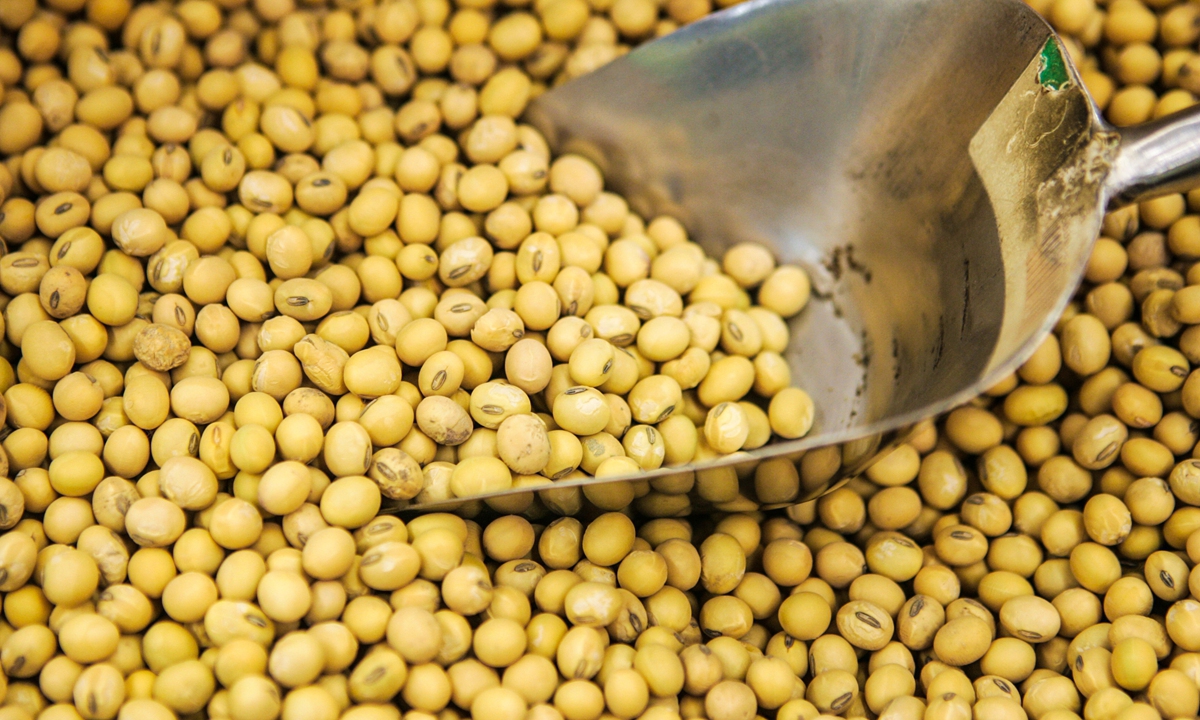
China continues to be the leading destination for Brazilian soybeans, and the Brazilian soybean industry wants to further deepen this relationship, expecting historically high volumes in the coming months, the Brazilian Association of Soybean Growers (Aprosoja Brasil) told the Global Times on Friday.
Brazilian soybean exports to China have remained very strong. China imported 12.08 million tons of soybeans from Brazil in June, up 13.7 percent year-on-year, while imports from the US fell 20.9 percent year-on-year to 1.27 million tons, according to data from the General Administration of Customs.
China imported 34.75 million tons of soybeans from Brazil during the period, up 9.1 percent year-on-year, according to Aprosoja Brasil. "Based on arrivals and customs clearance in China, there was clear growth," the association said.
According to the official data platform Brazilian Comex Stat, which records shipments at origin, 48.32 million metric tons were destined for China from January through June, largely unchanged from 48.41 million metric tons during the same period in 2025.
The difference between the two datasets mainly reflects timing and methodological differences between the recording of departures, cargoes in transit, arrivals and customs clearance.
Aprosoja Brasil said that the broader economic conclusion is the same: "Trade flows remained historically strong, China continued to be the leading destination for Brazilian soybeans, and Brazil's total soybean exports reached a first-half record of 69.57 million metric tons."
For farmers, strong export volumes help support the marketing of the crop, although record exports do not automatically mean record farm margins, said the Brazilian industry association.
China is the world's largest soybean importer. Imported soybeans are mainly used for oil production and animal feed. In terms of trading partners, China mainly imports soybean-related products from Brazil, the US, Argentina, Uruguay and Canada.
Brazil ranks among the world's leading soybean producers and exporters, with China being its largest export market for soybeans, according to the Xinhua News Agency.
Commenting on the significance of the Chinese market, Aprosoja Brasil said "China is absolutely strategic to Brazil's soybean industry," citing data showing that in 2025, China purchased 85.4 million metric tons, representing approximately 79 percent of all Brazilian soybean exports.
The two countries also have a highly complementary trade relationship. For Brazilian farmers, Chinese demand provides scale, market liquidity and greater capacity for long-term planning, said the Brazilian soybean industry association. For China, Brazil offers large, competitive and reliable supplies, as well as a crop calendar that complements production in other supplying countries.
Previously, policy shifts, such as US unilateral tariff measures, have caused disruption for US soybean farmers and other agricultural producers, Lü Xiang, research fellow at the Chinese Academy of Social Sciences, told the Global Times.
At the same time, China has been diversifying imports, including from Brazil and Argentina, to reduce risks from trade uncertainty, according to Lü.
Aprosoja Brasil noted that this partnership should not be seen merely as a temporary consequence of trade disputes involving third countries. Instead, it is a structural and mutually beneficial relationship, based on the complementarity between Brazil's production capacity and China's large demand for food, animal feed and protein, the industry group said.
Looking ahead to the soybean trade for the rest of the year, Aprosoja Brasil said that they are positive, while having a prudent mindset. Brazil has completed the harvest of a record soybean crop of approximately 180.6 million metric tons, and Brazilian soybean exports are expected to reach 116.3 million metric tons in 2026, which would also be a record, the association said.
"Brazil therefore has sufficient supply to continue serving the Chinese market strongly in the coming months... We expect historically high volumes, although not necessarily growth every single month, because soybean trade is seasonal and Northern Hemisphere supplies become more prominent during the second half of the year," it said.
。 新加坡保险与香港保险的区别新加坡保险市场概览 新加坡作为亚洲的保险枢纽,拥有一个庞大且高度发达的保险市场。2021年,新加坡的保险市场总资产达到了约436.78亿新币,这一数字充分反映了该市场的规模与重要性。新加坡的保险业包括76家直接保险公司和51家再保险公司等多样化的机构,为消费者提供广泛的保险产品和服务。在新加坡,保险产品涵盖多个领域,从寿险、医疗保险到旅游保险,满足了个人和企业的多种需求。新加坡的保险市场不仅在产品丰富性方面表现出色,还在技术创新上处于领先地位。随着数字化趋势的加速,保险公司越来越注重推动数字化解决方案的发展,提升用户体验,简化理赔流程,并通过技术手段提供更具个性化的服务。香港保险市场概述 香港是国际金融中心,保险市场发达,毛保费总额为5817亿港元。市场包括164家获授权保险公司,涵盖传统人寿保险、雇主责任险等多个领域。二、新加坡保险与香港保险的相似之处: 高度监管 新加坡和香港各自设有专门的保险监管机构——新加坡金融管理局(MAS)和香港保险业监管局。

B | 这些机构致力于保障市场的健康发展,确保消费者权益得到有效保护。多元化的保险产品 两地保险产品种类繁多,包括人寿保险、健康保险、投资连结保险等,以满足不同客户需求。市场活跃,吸引国际和本地保险公司的参与。

C | 活跃的保险市场 新加坡和香港保险市场都吸引了众多国际保险公司,注重创新,不断推出新产品和服务,提升市场竞争力。同时,两地保险公司都在探索利用人工智能等技术改善服务和降低风险。客户群体 两地的客户群体主要以中高收入人士为主,他们生活在相对稳定的经济环境中,拥有较高的生活水平,展现出对保险的强烈需求和较强的理财意识。保费融资和保单贷款 新加坡和香港的保险公司都提供保费融资和保单贷款服务,为客户提供灵活的支付选择。三、区别: 监管强度 新加坡保险受越来越多人关注其中一个主要原因是金融监管局对金融产品监管十分严格,定期抽查,各种明察暗访。新加坡注重消费者保护,监管更为严格,要求保险公司提供产品摘要和关键事实陈述。而香港采用以风险为本的资本制度,确保保险公司的财务稳定。数据保护 新加坡金融监管局要求保险公司必须在保单计划书中披露各项费用(包括销售费用)的收费情况,每份保单的运营成本及过去三年公司基金的投资回报率及管理费,投保人清晰地知道投保成本。

D | 香港的保险公司必须在网站上公布过往5年内所有产品预期分红实现率,帮客户更直观地了解一家保险公司实现预期回报的能力。产品类型 大病类保单在早期类保障方面,新加坡与香港同样各具优势。很多新加坡保险公司已经支持100%早期疾病赔付;香港的重疾险保单也普遍覆盖轻疾和个别儿童疾病,而且对于早期出现的重疾症状也会做出赔偿。另外,在储蓄分红保单方面,香港保单会将很高的预期回报率写在建议书里,长期利益演示跟新加坡的相比看起来回报更高,但这种做法新加坡的金管局是不允许的,新币最高的预期回报率只能放4.75%,这一点也可以看出两地监管力度的区别。在保险产品理念和设计方面,新加坡的保险产品更注重提供简单直接的保障,比如定期寿险。

E | 而香港的产品则更复杂,通常包含投资部分。

F | 这种差异体现在产品设计上,新加坡的产品侧重于为特定风险提供直接的保障,而香港的产品则更强调投资回报。使用货币 新加坡除美元外还可以选择以新加坡币投保。

G | 新币价值常年稳定,波动不大,从而在新加坡购买保险产品可以实现多方面对冲货币风险的目的。香港购买保险产品,可以选择港币,美元或人民币保单。长期趋势 新加坡是独立主权国家,也是世界闻名的法治社会,信用体系成熟,是全亚洲唯一一个主权信用评级达到AAA级的国家,金融领域健全严厉,内地客户同样受新加坡法律保护,一视同仁。从政治、法律稳定性、金融监管和信用评级等方面来看,新加坡作为一个独立自主的国家具有一定优势。相较之下香港作为全球三大金融中心之一,保险业的发达程度自然非常成熟,香港背靠内地,连接全球,只是香港是中国的特别行政区,其未来发展格局可能会受到国际形势和中国内部政治经济环境变化的影响,存在一定的不确定性。
Current article:http://ilzcqt3.cibianpangjujiusu.cyou/r6tr1r7/e7ws.html
Published on:06:14:13
栏目相关
- iPhone 14 Pro零售版到货 提前激活罚款20万/台_提前激活iPhone14每台罚款20万_Max
- OPPO Find X10全球首发!天工屏2.0正式发布:重新定义下一代显示标准
- 保育保健||预防甲流,守护健康——预防甲流知识宣传
- 泰国总理确认 王星已找到却与我们想的不一样 某种原因被缅边防扣押
- “圆明园特展”今起预约观展 单日限流1万人次 开展首周末吸引观众近6万人次
- 交通机构喊话政府:资金缺口太大,原定计划很难实现
- 台湾刚刚通报:新增49708例新冠确诊病例,新增37例死亡病例
- 关键战役全部缺席,库明加已连续三场未获上场机会但勇士全胜
- 17599元起!壹号本新旗舰掌机发布:三形态自由切换
- 上海数据中心“人去楼空”?特斯拉中国回应:不实消息
- 公务员大削减:新西兰统计局所有员工自愿裁员
- Assembly polls in Himachal to be held in single phase on Nov 12. Counting to be done on Dec 8
热门排行
- “第一夫人”被查,他怎么办?
- 两人利用新能源车“先充后付”漏洞,注册 870 个子账号狂薅车企超 40 万元电费被捕
- 奇葩还是创意?这群新加坡居民在地上“摆阵”,原来是在“排队”
- iPhone 14 Pro Max预售销量超同期,将推动苹果股价大涨_iPhone14ProMax成预售冠军_系列
- 突然撤销,宁德时代枧下窝矿复产进展又现新情况
- 第六届中国邮政“919电商节”启动
- Typhoon Dolphin inflicts downpours on multiple regions in China
- 海空接力!人民海军星夜救援重伤渔民
- 视频丨“新”钢铁是怎样炼成的?
- 或将于2026年中推出 全新起亚K4旅行版谍照曝光
- “폰 한 대 300만원 시대에 4분의 1 가격인데 AI까지?”…갤럭시 퀀텀7 나왔다
- 骑媒:无赛季揭幕战&圣诞大战 连续6年客场揭幕